Find your recipe keeper
CookBook vs Plan to Eat
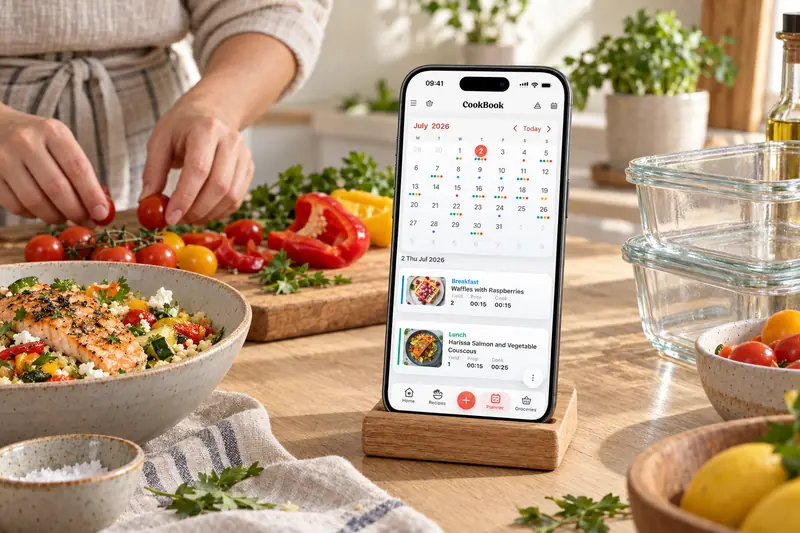
CookBook is our pick for meal planning with conversational recipe help, cooking tools and a continuing free allowance. Save recipes, ask how to adapt dinner and carry the same collection through planning, shopping and cooking on mobile and web.
Free for 20 recipes. Available on iOS, Android & web.
The decision
CookBook is our pick for meal planning with recipe-aware help
Bring your favourite recipes into a flexible meal plan, ask CookBook about a variation and turn chosen meals into an editable shopping list. Cooking tools, notes and recorded cooking history keep the next dinner connected to what worked. Start with a continuing free allowance. Choose Plan to Eat when reusable Menus, Freezer tracking and offline editing are your priorities.
Where CookBook stands out
- Save supported links, written recipes and personal notes in one editable collection.
- Ask CookBook about a saved recipe, explore ideas with AI Chef and cook with supported voice guidance.
- Start free with 20 recipes, 20 smart imports and 2 shopping lists.
Watch out for
- Plan to Eat needs a subscription after its 14-day trial; there is no continuing free plan.
- Neither app automatically knows your pantry stock. Plan to Eat’s Staples list is a manually maintained checklist.
- Plan to Eat exports recipes through its website. Check image transfers and preserve planning and freezer records separately.
Jump to a feature
A better fit for your routine
Why consider a Plan to Eat alternative?
Try CookBook when choosing and adapting dinner matters as much as scheduling it. Ask follow-up questions about a saved recipe, record what worked when you cooked it and begin with a free allowance that continues after your first week.
- You want conversational help adapting a dish or developing a new idea, alongside focused ingredient suggestions.
- You want a continuing free recipe collection instead of subscription-only access after a trial.
- You want focused cooking steps, timers and supported narration, with notes and recorded cooking history for next time.
From inspiration to dinner
What makes CookBook different
CookBook connects the meals on your calendar with conversations about the recipe and a record of what you cooked. Both apps import social recipes and scans; CookBook adds a continuing free allowance and conversational help around your own collection.
- A conversation about dinner, not just a substitution
- Ask CookBook lets you explore the saved recipe and follow up on a suggestion. AI Chef gives ingredients or preferences a starting point when no recipe has been chosen. Explore cooking conversations
- A collection you can begin without a subscription
- Start with 20 saved recipes, 20 smart imports and 2 shopping lists. Pro is available when you need more; Plan to Eat requires a subscription after its trial. See free and Pro plans
- Cook the recipe and remember what worked
- Use focused steps, adjustable text and timers, with narration where supported. Rate the result and record your cook and changes so the next dinner benefits from them. Explore cooking mode
- One place for the collection behind your plan
- Bring supported social finds, websites and written recipes into CookBook, then tag them, adapt a favourite and build the week around meals you chose. Planning remains connected to your personal collection. Plan with your own recipes
At a glance
Strong: a clear fit for this task. Limited: restrictions or extra steps. Not available: absent from the version or platform named. Read each note for plan and device details.
| Features | CookBook | Plan to Eat |
|---|---|---|
| Best fit | Mixed-source recipe collection Keep social recipes, written recipes and personal notes together, then plan, shop and cook. | Repeatable calendar-led planning A useful fit when your main task is scheduling meals and generating the week’s shopping list. |
| Devices | Strong iOS, Android and web One CookBook account across supported devices. Browser access is not a native Windows or Mac application. | Strong iOS, Android and web One subscription covers the account across devices. |
| App languages | Strong 7 app languages English, French, German, Italian, Spanish, Polish and European Portuguese. The app language is separate from the website language. | Limited English interface Recipes can contain other languages. Plan to Eat says its interface is English and foreign-language ingredient units may need separate manual entry. |
| Website and social saving | Strong Supported links Accessible websites, Instagram, TikTok, Facebook and other supported sources; review the saved ingredients and method. | Strong Web and supported social imports Official guides cover Instagram and TikTok through the mobile share extension. |
| Written recipe scanning | Strong Included; limits by plan Photos, cookbook pages and handwritten recipes. Free smart-import allowance applies; Pro removes that allowance limit. | Strong Photo importing Select one or more images for one recipe; multiple pages are different from multiple recipes. |
| Plan meals and shop | Strong Included; limits by plan Recipes feed your meal planner and editable shopping lists. Free plan allows 2 lists. | Strong Calendar-led workflow Calendar, reusable Menus and Freezer records support repeat planning; planned meals generate the shopping list. |
| Cooking tools | Strong Cooking mode Larger text, step navigation and timers; read-aloud support depends on the device. | Strong Cooking View Overview or step-by-step view, screen awake, and switching between recipes for a meal. |
| Recipe nutrition | Strong Pro calculation Pro estimates recipe nutrition; saved values feed daily planner totals. Recalculate after ingredient changes. | Strong Nutrition tools Calculates recipe nutrition and displays daily nutrition and macro totals on the Planner. |
| Export and moving recipes | Strong Export and supported bulk imports Backups link to hosted images; preserve images before account deletion. Self-service CSV/.cookbook ZIP: up to 250 recipes. Other supported transfers need Pro team help. | Strong Whole-library CSV or TXT export Export on the website, including after subscription expiry. CSV contains photo URLs; verify images and transfer fields separately. |
| Free option | Limited 20 recipes and 20 smart imports Also includes 2 shopping lists. The yearly Pro plan offers a 14-day trial. | Limited 14-day trial No credit card required. Continued app use after the trial needs a subscription. |
| Price basis, checked September 2026 | Pro: US$39.99/year US$6.99/month is also offered. Indicative USD; the in-app country, store and offer price applies. | US$49/year US$5.95/month also listed on the current site. Verify taxes, region and checkout terms. |

Scroll sideways to compare all apps
Compare the workflow
Recipe imports: both go beyond websites
| Features | CookBook | Plan to Eat |
|---|---|---|
| Website and social capture | Strong Links, sharing and Chrome extension | Strong Clipper and social share extension |
| Written recipe photos | Strong Automatic and Manual scanner modes | Strong Photos, including one multi-page recipe |
Scroll sideways to compare all apps
CookBook brings supported websites, Instagram, TikTok and other social sources into an editable recipe library. Use mobile sharing, paste a link or text, or save a website with the Chrome extension. Its scanner covers written pages and handwritten family cards, so different sources end up in the same collection.
Plan to Eat also imports Instagram and TikTok through its mobile share extension. Its photo importer accepts multiple images of one recipe, including multi-page instructions. Both apps can turn social finds and written recipes into editable records; a multi-page recipe is different from a batch of unrelated recipes.
Check portions, complete ingredients and an ordered method after importing. If a Reel leaves out an amount, find the creator’s full recipe before cooking. An imported card can still contain the gaps in its source.
The verdict
Choose CookBook for an import-to-cooking collection with AI help alongside it. Social and photo importing alone do not separate these apps.
Compare the workflow
Organisation: find dinner without remembering the source
| Features | CookBook | Plan to Eat |
|---|---|---|
| Tags and recipe retrieval | Strong Tags, favourites and ingredient search | Strong Categories, tags and ingredient search |
| Remember previous meals | Strong Recorded cooking notes and history | Strong Recipe ratings and planner history |
Scroll sideways to compare all apps
CookBook’s tags, favourites, ratings and ingredient search help you retrieve a dish by what you remember. A curry can be both Weeknight and Vegetarian without duplicating the recipe. Record your notes and last-cooked history as you use the collection.
Plan to Eat organises recipes by course, cuisine, main ingredient, rating and tags. It also searches recipe titles, keywords and ingredients, making it practical to find a meal before adding it to the calendar.
For a practical example, save a family curry, a social-media pasta and a website tray bake. Tag the quick dinners consistently and search for spinach. Use the results to choose dinner, then clear filters before assuming a recipe disappeared.
Make CookBook comfortable to return to: choose a colour scheme, light or dark appearance, text size and which home sections stay visible. Ratings, notes and recorded cooking history help you find the version your household liked.
The verdict
Both support useful organisation. Choose CookBook when finding, adapting and recording your own favourites is the centre of the experience.
Compare the workflow
AI help: conversation or focused recipe tools?
| Features | CookBook | Plan to Eat |
|---|---|---|
| Recipe help | Strong Ask CookBook conversations | Strong Ingredient Suggestions and Beginner Mode |
| Starting a new dish | Strong AI Chef and Dish Detector suggestions | Bring recipes into your Recipe Book |
Scroll sideways to compare all apps
Ask CookBook lets you discuss the saved recipe in front of you: request a substitution, a quicker version or help with a technique, then review the suggested changes. AI Chef starts recipe ideas from your ingredients or preferences. Dish Detector suggests a version of a photographed dish; it cannot recover hidden ingredients or the exact original.
Plan to Eat has AI features too. Its Ingredient Suggestions offer substitutions, and Beginner Mode rewrites directions for less experienced cooks. These focused tools answer specific needs within an existing recipe.
For an ongoing conversation about adapting dinner, CookBook is the stronger fit. For a quick substitution or simpler instructions, Plan to Eat already provides useful assistance. Review generated quantities, ingredient suitability and cooking steps in either workflow.
The verdict
Choose CookBook for conversational help and new recipe ideas. Plan to Eat suits quick ingredient suggestions and simpler directions within an existing recipe.
Compare the workflow
Meal planning: everyday flexibility or repeatable menus?
| Features | CookBook | Plan to Eat |
|---|---|---|
| Moving meals | Strong Edit dates; bulk copy or move | Strong Move meals and reuse Menus |
| Prepared freezer stock | Limited Record leftovers manually | Strong Dedicated Freezer with quantities |
Scroll sideways to compare all apps
CookBook schedules saved recipes by day and meal, with day, week and month views. Move a dinner when plans change or copy a date range, then review the shopping list for the meals you will actually cook.
Plan to Eat’s Menus save groups of planned meals to use again. Its Freezer records prepared meals, servings and freezing dates, then helps schedule them with a defrost reminder. These are meaningful strengths for batch cooks and households repeating a familiar rotation.
CookBook can help you plan a batch of soup, but it does not automatically maintain leftover stock. If you cook four portions for two dinners, buy the ingredients once and record the later meal deliberately. Dedicated freezer tracking is a reason to prefer Plan to Eat.
The verdict
Choose CookBook for flexible planning around saved favourites. Plan to Eat has the advantage when reusable Menus and a tracked Freezer are essential.
Compare the workflow
Shopping and pantry checks: know what to buy
| Features | CookBook | Plan to Eat |
|---|---|---|
| Recipe shopping lists | Strong Editable lists from recipes or dates | Strong Automatic list for planner dates |
| Recurring groceries | Strong Regular Items | Strong Staples list |
| Pantry subtraction | Limited Check and adjust manually | Limited Check and adjust manually |
Scroll sideways to compare all apps
CookBook builds editable shopping lists from recipes or selected planner dates. Merge or split items, adjust the amount to buy and keep frequently purchased products in Regular Items. Adding two recipes does not mean you must buy everything twice.
Plan to Eat generates its list from the chosen calendar range and merges ingredients when their names and units match. Its Staples list holds recurring purchases and can serve as a manually maintained pantry checklist. Items you already own are not automatically removed from the shopping list.
If two dinners need 200 g and 300 g of carrots, the combined requirement is 500 g. With 200 g already in your fridge, buy 300 g. Keep fresh and dried ingredients separate when merging would obscure what the recipe needs.
The verdict
CookBook covers the recipe-to-list routine well. Plan to Eat suits a calendar-led shop. In both apps, check what you already own before buying.
Compare the workflow
Cooking: follow the recipe comfortably
| Features | CookBook | Plan to Eat |
|---|---|---|
| Following steps | Strong Focused steps and larger text | Strong Overview or step-by-step view |
| Cooking progress | Strong Ingredients, timers and recorded notes | Strong Step memory across planned dishes |
| Keep cooking visible | Strong Keep-awake support on compatible devices | Strong Mobile Cooking View keeps the screen awake |
Scroll sideways to compare all apps
CookBook combines focused steps, adjustable text, timers and ingredient progress. Read-aloud guidance depends on your device. When dinner is done, rate the result and record your notes so the next attempt reflects how you like to cook.
Plan to Eat’s Cooking View shows either the whole recipe or one direction at a time while keeping ingredients available. It keeps the mobile screen awake and remembers your current step when switching between recipes scheduled for the same meal. Its release notes also document ingredient and step check-off.
In CookBook, change the serving count and the ingredient quantities adjust. Choose original units or US, metric, imperial or Australian measurements. Cooking time does not scale automatically; weight-to-volume estimates depend on the ingredient.
The verdict
Choose CookBook for timers, supported narration and a cooking record. Plan to Eat is particularly useful when switching between several dishes planned for one meal.
Compare the workflow
Nutrition: both can calculate and plan with it
| Features | CookBook | Plan to Eat |
|---|---|---|
| Recipe nutrition | Strong Pro ingredient-based estimates | Strong Calculated recipe nutrition |
| Daily planner totals | Strong Saved nutrition and macro goals | Strong Daily nutrition and macro totals |
Scroll sideways to compare all apps
CookBook Pro estimates recipe nutrition from ingredients and servings. Saved nutrition can feed daily planner totals, and you can set personal macro goals. Recalculate after ingredient changes and refresh saved percentages when your goals change.
Plan to Eat also calculates recipe nutrition and shows daily macro totals in its planner. Both can help you plan around nutrition; choose the recipe and planning workflow you prefer.
Check ingredient quantities and serving sizes first. Changing a recipe from four portions to six changes what each portion represents; a calculated total is useful context, not a clinical measurement.
CookBook also lets you enter your own recipe nutrition values. Pro adds personal calorie and macro targets. Planner totals start with one consumed serving per planned recipe, so adjust the portions you expect to eat rather than assuming the whole dish counts.
The verdict
Choose CookBook if you want nutrition alongside its wider recipe and AI workflow. Both apps support recipe calculations and planner totals.
Compare the workflow
Devices and offline use: the important distinction
| Features | CookBook | Plan to Eat |
|---|---|---|
| Mobile and browser access | Strong iOS, Android and web | Strong iOS, Android and web |
| Offline mobile work | Limited Synced recipe and cached-list access | Strong Recipe, planner and current-list edits |
Scroll sideways to compare all apps
Both apps support iOS, Android and a web browser under the same respective account. CookBook lets you organise on a computer and cook from your phone without buying a separate desktop version.
CookBook’s mobile apps can open previously synced recipes and cached shopping lists offline. Recipe editing, planner updates, imports and AI need a connection; its web app also needs the internet.
Plan to Eat’s mobile app goes further offline: it can edit saved recipes, alter the meal plan and update the current list, then sync when connected. You must already be signed in and load the shopping list first; changing its date range requires a connection.
The verdict
Both work across devices. Plan to Eat is the better fit if editing recipes and changing plans without internet access is a requirement.
Compare the workflow
Pricing: continuing free access or a timed trial?
| Features | CookBook | Plan to Eat |
|---|---|---|
| Ongoing free use | Limited 20 recipes, 20 imports, 2 lists | Not available Subscription after the trial |
| Yearly guide price | US$39.99 | US$49 |
| Monthly guide price | US$6.99 | US$5.95 |
Scroll sideways to compare all apps
CookBook starts free with up to 20 saved recipes, 20 smart imports and 2 shopping lists. Pro guide prices are US$6.99 monthly or US$39.99 yearly; the yearly plan includes a 14-day trial.
Plan to Eat lists US$5.95 monthly or US$49 yearly and a fully featured 14-day trial without requiring a credit card. Continued use needs a subscription. Its lower monthly price and CookBook’s lower yearly guide price answer different purchasing decisions.
These are published US dollar examples checked on 18 September 2026. Country, store, taxes and offers can change what you pay. Compare the actual renewal period and amount shown at checkout, especially if you expect to subscribe for only part of a year.
The verdict
Start with CookBook for a continuing free allowance and the lower listed annual guide price. Plan to Eat lists the lower month-to-month amount.
Compare the workflow
Sharing: one account is not separate family profiles
| Features | CookBook | Plan to Eat |
|---|---|---|
| Same-account household access | Strong Shared collection and settings | Strong Shared recipe book, plan and list |
| Sharing individual recipes | Strong Recipe files and mobile QR codes | Strong Text, email and Friends |
Scroll sideways to compare all apps
CookBook keeps recipes, plans and shopping lists in sync when you use the same account on supported devices. Separate accounts can exchange recipes, but CookBook does not currently link them into household profiles with different permissions.
Plan to Eat also describes household use through one shared login. Its Friends section lets other Plan to Eat users exchange recipes, while recipes can also be sent by text or email. Sharing a recipe is different from jointly editing one household master copy.
Agree who can change or delete recipes before sharing account access. If each person wants private notes and plans, keep separate accounts and exchange the dishes you want to share.
The verdict
Choose CookBook for your personal collection and cross-device sync. Neither shared-login workflow should be mistaken for separate family roles.
App language and recipe language
Choose the language you actually cook in
| Features | CookBook | Plan to Eat |
|---|---|---|
| App interface languages | Strong 7 app languages: English, French, German, Italian, Spanish, Polish and European Portuguese | Limited English interface. Recipes can contain other languages. Plan to Eat says its interface is English and foreign-language ingredient units may need separate manual entry. |
Scroll sideways to compare all apps
CookBook works in English, French, German, Italian, Spanish, Polish and European Portuguese. Use the app in your preferred language, then decide whether to translate a recipe. Changing the website language does not change the app or rewrite your collection.
Recipes can contain other languages. Plan to Eat says its interface is English and foreign-language ingredient units may need separate manual entry.
CookBook’s optional automatic import translation is off until enabled and supports its six non-English app languages. With Pro, the saved-recipe Translate tool can also translate into English. Review the translated ingredients and method before saving; translation and measurement conversion are separate choices.
The verdict
Choose CookBook for a translated app interface as well as recipes in your language. Plan to Eat can store other-language recipes within its English interface.
Your decision
Who should choose which app?
Choose CookBook when you want to save, adapt, plan and cook from one collection, with a free way to start. Choose Plan to Eat when its Menus, Freezer records and offline planner editing are central to your weekly routine.
- Choose CookBook if…
- Choose CookBook if your priority is the whole recipe routine: saving, adapting, planning, shopping and cooking. Conversational help, a continuing free allowance and the lower listed annual Pro guide price make it our pick for this broader use. Try CookBook with your own recipes
- Choose Plan to Eat if…
- Choose Plan to Eat if recurring Menus, tracking prepared food in the Freezer and editing plans offline are essential. Its subscription has a lower listed monthly price, and its calendar-led shopping workflow suits dedicated batch planners.
Keep the recipes you love
Switching from Plan to Eat to CookBook
| Features | CookBook | Plan to Eat |
|---|---|---|
| Recipe backup | Strong Text, PDF or CB files | Strong Whole-library CSV or TXT |
| Images in an export | Limited Server links; preserve before deletion | Limited Photo URL field; verify image transfer |
Scroll sideways to compare all apps
You can start with a few favourites before moving the rest. Use the route below for Plan to Eat, then check the imported recipes against your originals.
CookBook also exports your collection. Its export images are links to hosted files, so preserve the image copies before deleting a CookBook account.
The verdict
Plan to Eat has a useful exit route, and CookBook supports the move. Keep independent image copies and rebuild planning records deliberately rather than assuming every field transfers.
Download your Plan to Eat recipes
Use its website to export CSV or TXT, including after a subscription expires. Retain both your export and access to the linked photos.
Choose assisted or self-service import
CookBook’s Pro team accepts Plan to Eat CSV or TXT files. For self-service, map the fields to CookBook’s CSV template and keep each file within 250 recipes.
Check the collection and planning records
Inspect recipe quantities, notes, tags, sources and images. Keep Menus, Freezer records and your calendar separately rather than assuming recipe exports contain them.
Plan your first meals in CookBook
Start with dinners you already enjoy, choose the servings and build the shopping list. Keep your original files until the new collection is checked.
Your next step
Try your next dinner in CookBook
Save a favourite, adjust it to suit you and plan the meal. That small routine is the clearest way to decide whether CookBook belongs in your kitchen.
A little more help
Frequently asked questions
Is CookBook a good Plan to Eat alternative?
Yes. CookBook is our recommended Plan to Eat alternative when you want meal planning, shopping lists and cooking tools alongside conversations about your saved recipes. You can start with 20 recipes, 20 smart imports and 2 shopping lists free. Plan to Eat is a strong choice for reusable Menus, dedicated Freezer records and offline editing. Both support social imports and recipe nutrition calculations.
Does Plan to Eat import social posts and photographs?
Yes. It documents Instagram and TikTok sharing plus recipe-photo imports. Multiple images can belong to one recipe; they are not a batch of separate recipes.
Does Plan to Eat have AI features?
Yes. Ingredient Suggestions provide substitutions and Beginner Mode rewrites directions. CookBook adds Ask CookBook conversations, AI Chef recipe ideas and Dish Detector suggestions to its recipe workflow.
Is Plan to Eat free?
Its 14-day trial requires no credit card, but continued use needs a subscription. CookBook has a continuing free allowance of 20 recipes, 20 smart imports and 2 shopping lists.
Compare CookBook plans Can I export Plan to Eat recipes after cancelling?
Yes. Its website offers CSV and TXT recipe exports after a subscription expires. Save the files and verify image copies before removing your old account.
Read the export instructions Can I move from Plan to Eat to CookBook?
Yes. The Pro import team accepts Plan to Eat CSV or TXT files. Self-service requires CookBook’s CSV template. Check a small sample before moving the full library.
Check the supported transfer processStill have a question? Visit our help centre.
Loved in real kitchens
Home cooks, in their own words.
From the first saved recipe to a collection of thousands. Here’s what CookBook customers have to say.
Swipe to read more, or use the arrows.
Bring the recipes behind your meal plan
Start CookBook with meals you already love, then add recipe-aware help and a cooking record to your routine. The free allowance includes 20 recipes, 20 smart imports and 2 shopping lists; Pro assistance can import your Plan to Eat files.
Get CookBook free