CookBook Team
Maillard reaction vs caramelization
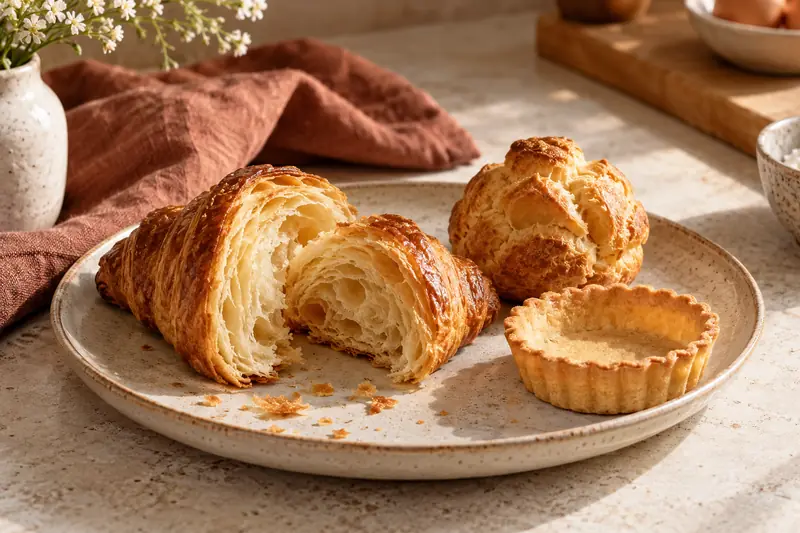
The Maillard reaction is the browning that happens when sugars react with amino acids from proteins, and it runs fastest on dry surfaces well above 100 °C (212 °F). Caramelization needs only sugar and heat.
CookBook TeamUpdated
What the Maillard reaction is
The Maillard reaction is a chain of reactions between reducing sugars and the amino groups of amino acids and proteins. It produces brown pigments called melanoidins and a wide range of aroma and flavour compounds. It is named after the French chemist Louis Camille Maillard, who described the browning of heated sugars and amino acids in 1912 (El Hosry and colleagues, Foods, 2025).
It is the main source of colour and roasted flavour in bread crust, seared meat, coffee, toasted nuts and barbecued meat (University of Guelph; Exploratorium). It also contributes to chewy caramels when sugar and cream are cooked together to about 118 °C (245 °F), around the firm-ball stage (Exploratorium). This is not the only caramel method: some recipes caramelize the sugar before adding cream, so caramelization and Maillard browning can both contribute. See how caramelization works.
What the reaction needs
- A reducing sugar. Glucose, fructose, lactose (milk sugar) and maltose all qualify. Sucrose (table sugar) does not, because the reactive ends of its glucose and fructose halves are locked in the bond between them (University of Guelph). It joins in once heat, acid or enzymes split it into those two sugars.
- Amino groups from amino acids and proteins (El Hosry and colleagues).
- Heat and time. The higher the temperature, the faster the reaction.
- Not too much water. Browning runs best at moderate moisture and is held back on a wet surface.
Temperature: slow when cool, fast when hot
There is no single Maillard temperature. The reaction runs slowly in cold storage, in some cases even below freezing, and speeds up as the temperature rises (El Hosry and colleagues). University of Richmond teaching material puts the heat needed for browning at about 120 °C (250 °F), compared with about 160 °C (320 °F) for caramelization. Gabriel Keith Harris, a food science professor at NC State University, says browning is quick and efficient once the surface of a steak reaches about 177 °C (350 °F).
Why wet surfaces stay pale
Water holds the surface temperature down. A wet surface cannot climb much past the boiling point of water, which is 100 °C (212 °F) at sea level and lower at altitude (USDA Food Safety and Inspection Service). That is well below where browning runs fast, so the moisture has to evaporate first. The sizzle when food hits a hot pan is that water leaving, and Harris calls this surface drying one of the first important steps in getting the reaction going (NC State University). It is also why browning needs dry heat such as roasting, baking, frying or grilling, while boiled and steamed food stays pale (University of Richmond).
How pH and moisture change browning
pH. The Maillard reaction runs faster in alkaline conditions and slower in acidic ones. In acid, the amino groups pick up hydrogen ions, which makes them less reactive (El Hosry and colleagues; University of Guelph). That is why pretzels go so dark: America’s Test Kitchen notes that professional bakers dip them in lye (pH 13 to 14) for rapid browning, while a plain baking soda bath (about pH 8) gives only a little colour unless the soda is first baked into sodium carbonate (about pH 11).
Moisture. Browning is fastest at moderate water activity, about 0.5 to 0.8 on a scale where pure water is 1, and slows when food is very dry (below about 0.4) or very wet (above about 0.9) (El Hosry and colleagues). In cooking terms: dry the surface, and let the inside stay moist.
Maillard reaction vs caramelization compared
| Feature | Maillard reaction | Caramelization |
|---|---|---|
| What reacts | Reducing sugars plus amino groups from amino acids and proteins | Sugar alone, including sucrose; no protein needed |
| Typical temperatures | Slow even when cold; browning from about 120 °C (250 °F); fast at surface temperatures around 177 °C (350 °F) | From about 110 °C (230 °F) for fructose to 180 °C (356 °F) for maltose; table sugar at about 160–170 °C (320–338 °F) |
| Moisture | Fastest at moderate water activity (0.5–0.8); a wet surface stays too cool | Happens as water is driven off; a sugar syrup colours only once its water has boiled away |
| pH | Faster when alkaline, slower when acidic | Slowest near pH 7, faster below pH 3 and above pH 9 |
| Example foods | Bread crust, seared meat, coffee, toasted nuts, chewy caramels | Brittle, praline, nougatine, caramel decorations, caramel-coated nuts |
| Flavour | Roasted, toasted and meaty, with buttery notes | Sweet to bitter, with buttery (butterscotch) and nutty notes |
Sources for the table: El Hosry and colleagues; University of Guelph; NC State University; University of Richmond; Exploratorium; NIST. For sugar temperatures, colour stages and the chemistry of caramel, read Caramelization explained.
Practical ways to get better browning
Dry the surface
Pat meat, poultry and vegetables dry before searing and let wet marinades drain. Every bit of surface water has to evaporate before the surface can rise past 100 °C (212 °F) and brown quickly.
Preheat the pan and leave space
Heat the pan or oven fully before the food goes in, so surface water flashes off and the sizzle starts straight away. Leave room between pieces: food packed tightly holds its own released water and steam against the surface, which keeps the temperature down for the same reason a wet surface stays pale.
Use baking soda sparingly
Because an alkaline surface browns faster, a small amount of baking soda (sodium bicarbonate) can speed browning. Use very little, because it also changes texture: in one America’s Test Kitchen recipe, just 1/8 teaspoon (about 0.6 ml) of baking soda raised the pH of the onions enough that they softened quickly and nearly melted into the sauce. Lye gives the deepest pretzel colour but is extremely corrosive and needs gloves and eye protection (America’s Test Kitchen).
Brush on egg or milk
Browning in the oven needs both sugar and protein at the surface. An egg wash helps a crust brown and gives it a glossy finish, and adding sugar, for example a sweetened milk or a little maple syrup, deepens the colour further (King Arthur Baking). Milk brings its own lactose, which is a reducing sugar (University of Guelph).
Acrylamide: a by-product to keep in check
Acrylamide forms through the Maillard reaction when the amino acid asparagine reacts with sugars at high temperatures (El Hosry and colleagues; FDA). The UK Food Standards Agency (FSA) says it forms when starchy foods such as potatoes and bread are baked, fried, grilled, toasted or roasted above 120 °C (248 °F). The FDA finds it mainly in potato products, grain products and coffee, and not in raw, steamed or boiled foods.
Acrylamide caused cancer in animals exposed to very high doses. The FDA notes that a joint FAO/WHO expert committee concluded it is a human health concern, and the FSA recommends that everyone reduces their intake as a precaution. Their practical advice:
- Cook starchy foods such as chips, roast potatoes and toast to a golden yellow or light brown colour rather than dark brown (FSA; FDA).
- Follow the cooking instructions on packs of chips and roast potatoes (FSA).
- Soak raw potato slices in water for 15–30 minutes before frying or roasting (FDA).
The two agencies disagree on storing potatoes. The FDA says storing them in the refrigerator can increase acrylamide during cooking and advises a cool, dark place instead. The FSA used to give the same advice, but after a study reviewed by the Committee on Toxicity of Chemicals in Food found that home fridge storage does not materially increase acrylamide-forming potential, it now says either the fridge or a cool, dark place is fine.
Keep your browning notes with your recipes
CookBook saves recipes from websites, social posts, photos and cookbooks and keeps them organised, so the roast, bread and pretzel recipes you rely on are in one place. In cooking mode you can change servings and the measurement system. Ingredient amounts scale but cooking times do not, so keep watching the colour of the crust rather than the clock. See how to add and import recipes.
Sources
- Foods (MDPI): Maillard reaction: mechanism, influencing parameters, advantages, disadvantages, and food industrial applications: a review (El Hosry and colleagues, 2025)
- University of Guelph, Department of Food Science (Rogers Lab): Caramelization and Maillard reaction
- University of Guelph, Department of Food Science (Rogers Lab): Mono and disaccharide structures
- NC State University College of Agriculture and Life Sciences: The science of steak on the grill
- University of Richmond, Chemistry of Cooking: Guided inquiry activity 17, browning reactions (Wiley, 2016)
- Exploratorium: Science of candy, caramelization and caramels
- NIST: Metric kitchen, culinary temperature
- USDA Food Safety and Inspection Service: Food thermometers
- America’s Test Kitchen: Professional-quality soft pretzels at home
- Cook’s Illustrated (America’s Test Kitchen): Overhauling sloppy joes
- King Arthur Baking: How one plant-based milk became our test kitchen’s favourite egg wash
- US Food and Drug Administration: Acrylamide questions and answers
- US Food and Drug Administration: Acrylamide and diet, food storage, and food preparation
- Food Standards Agency (GOV.UK): Acrylamide
A little more help
Frequently asked questions
Does food brown in a slow cooker or a sous vide bath?
Very little. In both, the food sits in moisture at or below the boiling point of water, where the Maillard reaction runs slowly. For a browned crust and roasted flavour, sear the food in a hot, dry pan before or after the slow cooking.
Why do cakes made with honey or milk brown faster?
Both add extra reducing sugar to the surface. Honey is rich in fructose, which browns readily, and milk adds lactose along with milk proteins, so the crust colours sooner than one made with table sugar and water alone.
Should I avoid browning food because of acrylamide?
Food safety agencies do not tell you to avoid browning. Their advice is aimed at starchy foods such as chips, roast potatoes and toast: cook them to golden yellow or light brown rather than dark brown. The UK Food Standards Agency also advises eating a healthy, balanced diet.
Why does bread crust brown while the inside of the loaf stays pale?
The inside of a loaf stays moist, so it cannot get much hotter than the boiling point of water. The crust dries out and climbs well above that temperature, which is where browning speeds up, so only the outside turns brown.
Still have a question? Visit our help centre.
Cite this page
Referencing these numbers or explanations? Copy this citation and link to the page.
“Maillard reaction vs caramelization”, CookBook Manager. Updated . https://cookbookmanager.com/guides/maillard-reaction
Text, tables and data on this page are available under the Creative Commons Attribution 4.0 licence (CC BY 4.0). Credit CookBook Manager and link to this page when you reuse them.