Mother sauces, roux ratios and practical fixes
Béchamel, velouté, espagnole, hollandaise and tomato are the five classical French mother sauces. Learn their bases and thickening methods, then use the ratio tables for a sauce you can repeat.
CookBook TeamUpdated
The five classical French mother sauces
These five sauce families are a practical map of classical French cooking. Each has a base and a way to thicken it, then becomes another sauce when you add a flavouring [1].
| Sauce | Base and thickener | A useful variation |
|---|---|---|
| Béchamel | Milk with a pale roux | Add cheese for Mornay. |
| Velouté | Light stock with a pale or blond roux | Use chicken, fish or vegetable stock to suit the dish. |
| Espagnole | Brown stock with brown roux and aromatics | A starting point for richer brown sauces. |
| Hollandaise | Egg yolks and butter, emulsified | Tarragon and an acidic reduction lead towards béarnaise. |
| Tomato | Tomatoes and aromatics, cooked down | Adjust herbs and texture for the dish. |
The list describes a classical family tree, not every sauce in the world. Tomato sauce does not always need flour, and the warm emulsion in hollandaise needs different handling from a simmered roux sauce [1].
Roux: equal weights of flour and fat
Start with one part flour to one part butter by weight. For example, 50 g flour and 50 g butter make 100 g roux before liquid is added. Equal spoonfuls are not equal weights [1].
| Roux stage | Look and smell | Use |
|---|---|---|
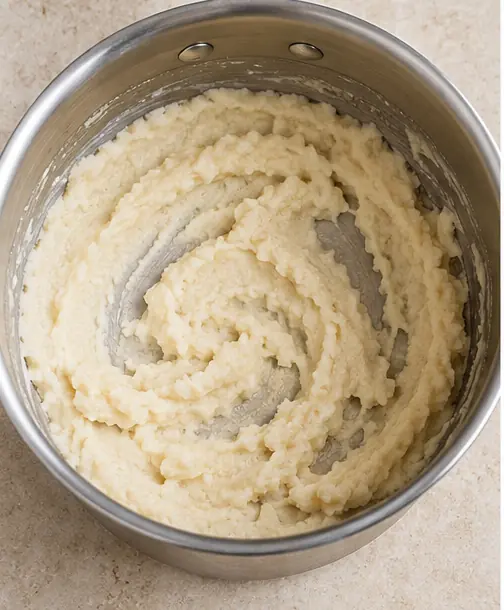
| White | Pale paste; raw flour smell has cooked out | White sauce and béchamel. |
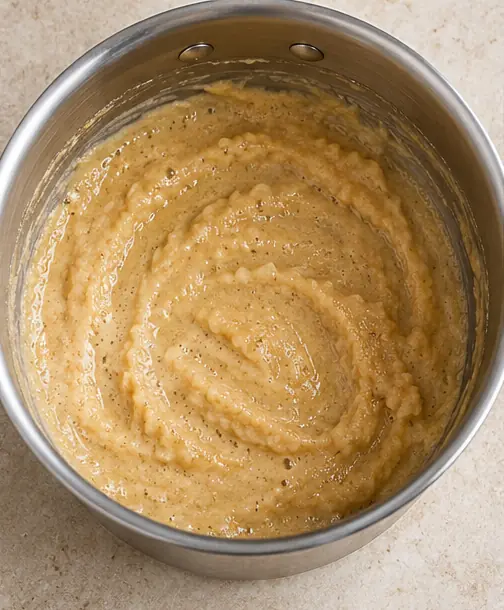
| Blond | Light gold with a toasted aroma | Light stock sauces. |
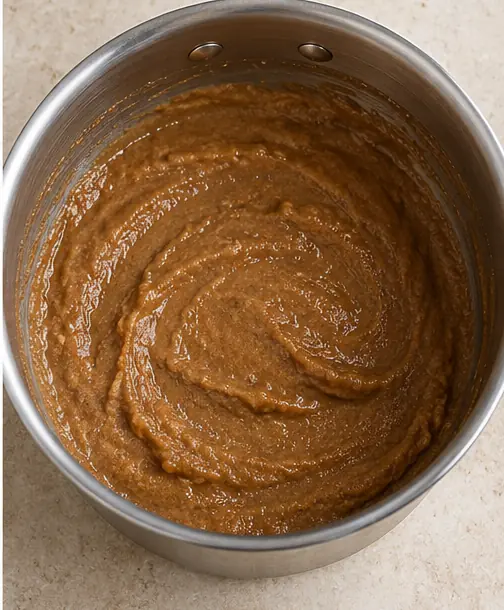
| Brown | Brown and deeply toasted, without black flecks | Brown sauces; colour changes the thickening effect. |
Watch colour and smell rather than relying on a fixed number of minutes. If the roux smells burnt or has black flecks, start again [1].
A repeatable white-sauce starting ratio
For a thick white sauce, use 50 g butter, 50 g plain flour and 500 ml milk. For half a batch use 25 g, 25 g and 250 ml; for a double batch use 100 g, 100 g and 1 litre [2].
| Batch | Butter | Flour | Milk |
|---|---|---|---|
| Half | 25 g | 25 g | 250 ml |
| Standard | 50 g | 50 g | 500 ml |
| Double | 100 g | 100 g | 1 litre |
- Melt the butter gently, stir in the flour and cook while stirring until the paste loses its raw flour smell.
- Add milk gradually, whisking smooth before adding more.
- Bring to a gentle simmer and keep stirring as it thickens. The reference method simmers for 5 to 10 minutes.
- Season and judge the sauce at serving temperature. Loosen a thick sauce with milk a little at a time.
The batch table scales ingredient quantities; heating time does not multiply with the ingredients [2]. Use the servings calculator for another size.
Lumpy, thin, split or burnt?
| Problem | Next action |
|---|---|
| Lumps in white sauce | Take it off the heat and whisk until smooth before adding more liquid. |
| Too thick | Whisk in a little warm liquid at a time. |
| Too thin | Let it simmer gently before deciding to add more thickener. |
| Burnt smell | Start again; extra seasoning will not remove the burnt flavour. |
| Split butter-and-egg emulsion | Take it off direct heat. Follow a hollandaise rescue method rather than boiling it or adding flour. |
Keep a roux-thickened sauce and an emulsion separate in your troubleshooting: one develops thickness through starch, the other holds fat and liquid together [3].
Choose a thin, medium or thick white sauce
For a spoon-measured white sauce, choose a complete row below for each 1 US cup of milk. Use level US tablespoons for both butter and flour. These are volume measures, not equal butter and flour weights [4].
| Consistency | Butter | Plain flour | Milk | Use |
|---|---|---|---|---|
| Thin | 1 US tbsp | 1 US tbsp | 1 US cup | Cream soups and vegetable sauces. |
| Medium | 2 US tbsp | 2 US tbsp | 1 US cup | Casseroles and cheese sauce. |
| Thick | 3 US tbsp | 3 US tbsp | 1 US cup | Soufflé mixtures. |
Melt the butter, blend in the flour, then remove from the heat to stir in the milk. Return to the heat and stir as it comes to the boil. If it will not cook further in another dish, boil while stirring for 1 minute. Season to suit the meal [4]. Use the unit converter to check US spoon and cup volumes.
Build a sauce into a complete meal
Use béchamel in a savoury pie, pair tomato sauce with fresh pasta or use browning to build flavour before a pan sauce. Save the complete recipe and your adjustments in CookBook so a successful sauce is easy to repeat.
Sources
A little more help
Frequently asked questions
Does an equal-weight roux use equal spoonfuls?
No. Equal weights of flour and butter do not mean equal spoonfuls. Weigh them for the 1:1 roux formula. The separate spoon-measured white-sauce table uses its own complete proportions.
Can I thicken hollandaise with a roux?
That changes the type of sauce. Hollandaise is an egg-and-butter emulsion; manage its heat and emulsion instead of treating it as a flour-thickened sauce.
Still have a question? Visit our help centre.
Cite this page
Referencing these numbers or explanations? Copy this citation and link to the page.
“Mother sauces, roux ratios and practical fixes”, CookBook Manager. Updated . https://cookbookmanager.com/guides/mother-sauces
Text, tables and data on this page are available under the Creative Commons Attribution 4.0 licence (CC BY 4.0). Credit CookBook Manager and link to this page when you reuse them.
Keep reading
- Dough hydration explained
- Poolish, biga and levain compared
- Caramelization explained
- Maillard reaction vs caramelization
- Sugar syrup stages and temperatures
- Types of pastry compared
- French, Swiss and Italian meringue compared
- Bread proofing: temperature and readiness
- Cold-fermentation pizza dough guide
- Fresh pasta: ratios, rolling and troubleshooting